 15 min read

Why Shorts Can Boost – or Destroy – Your Long-Form Performance
Promotion strategies for Shorts and long-form videos rely on fundamentally different signals. For Shorts, the primary signals are "Scroll Stopper" and a view-through rate. Essentially, creators simply need to solve a problem: capturing viewers' attention for 5-15 seconds and getting them to return to the feed. Meanwhile, long-form videos must take into account the "Session Time" signal and the "Returning Viewers" metrics. They keep users on the platform for as long as possible.
YouTube's algorithms are based on thematic and behavioral consistency. So, creators often use Shorts to attract audiences who wouldn't otherwise be interested in their channels. Here, we mean audiences interested only in quick entertainment rather than consuming niche, comprehensive content. This YouTube audience mismatch triggers a chain of negative signals in the algorithms.
From Shorts to 24/7 Live Streams: Boosting the Average Audience Retention by 32%+
A YouTube channel in the Kids & Teens category with nearly 4 million subscribers was struggling to generate new content due to a team change. To maintain the same level of activity, the initial decision was to regularly post Shorts. However, this undermined audience retention, leading to a drop in recommendations. To address the situation, the creator switched to 24/7 live streams with Gyre. As a result, after a period of setbacks, the channel owner achieved the following results in just 90 days:
- Account for 40.1% of total watch time via streams.
- Generate $17,936 in revenue, four times more than in the previous period.
- Improve average audience retention by 32.24%.
The Hidden Audience Mismatch Problem
An incompatible audience is one that clicks the "Subscribe" button after watching a Short, but whose viewer behavior patterns don't align with your core content.
Let's consider an example. Your channel is dedicated to the history of architecture, and you upload a Short featuring a viral meme about funny frescoes. As a result, your Short quickly obtains 1 million views, gaining 5,000 new subscribers. However, your 20-minute analysis of Gothic architecture, released later and shown to these new subscribers, turns out to be uninteresting. It happens simply because these subs were initially looking for funny content (regardless of its topic). Consequently, this new audience either completely ignores the preview, leading to long-form CTR issues, or starts watching and then leaves, resulting in catastrophic low retention for long-form content.
The YouTube algorithm 2026 notices that, despite a large number of new subscribers, no one wants to watch your new, long-form content. Therefore, it stops recommending it even to loyal viewers, as the overall channel score declines.
Types of Shorts That Damage Your Long Videos
Not all short content, even that which has garnered millions of views, is equally useful. Specifically, we're talking about the following channel growth mistakes related to Shorts.
Meme-style, chaotic, and off-topic videos
Shorts, which are a chaotic compilation of short video clips or random personal moments (which are at odds with the theme of your vlog, meaning it's not personal), attract quickly passing traffic. So, these people will have zero loyalty to your long-form content. As a result, your subscriber base quickly fills with “dead souls.”
Viral one-offs unrelated to your niche
This category includes videos that went viral due to a hyped-up but completely irrelevant topic. For example, if your cooking channel suddenly releases Shorts featuring a cringe moment from a Donald Trump interview, it will give you quick reach. However, it also harms your subsequent videos about baking panettone and croissants.
Ultra-fast content vs your long-form pace
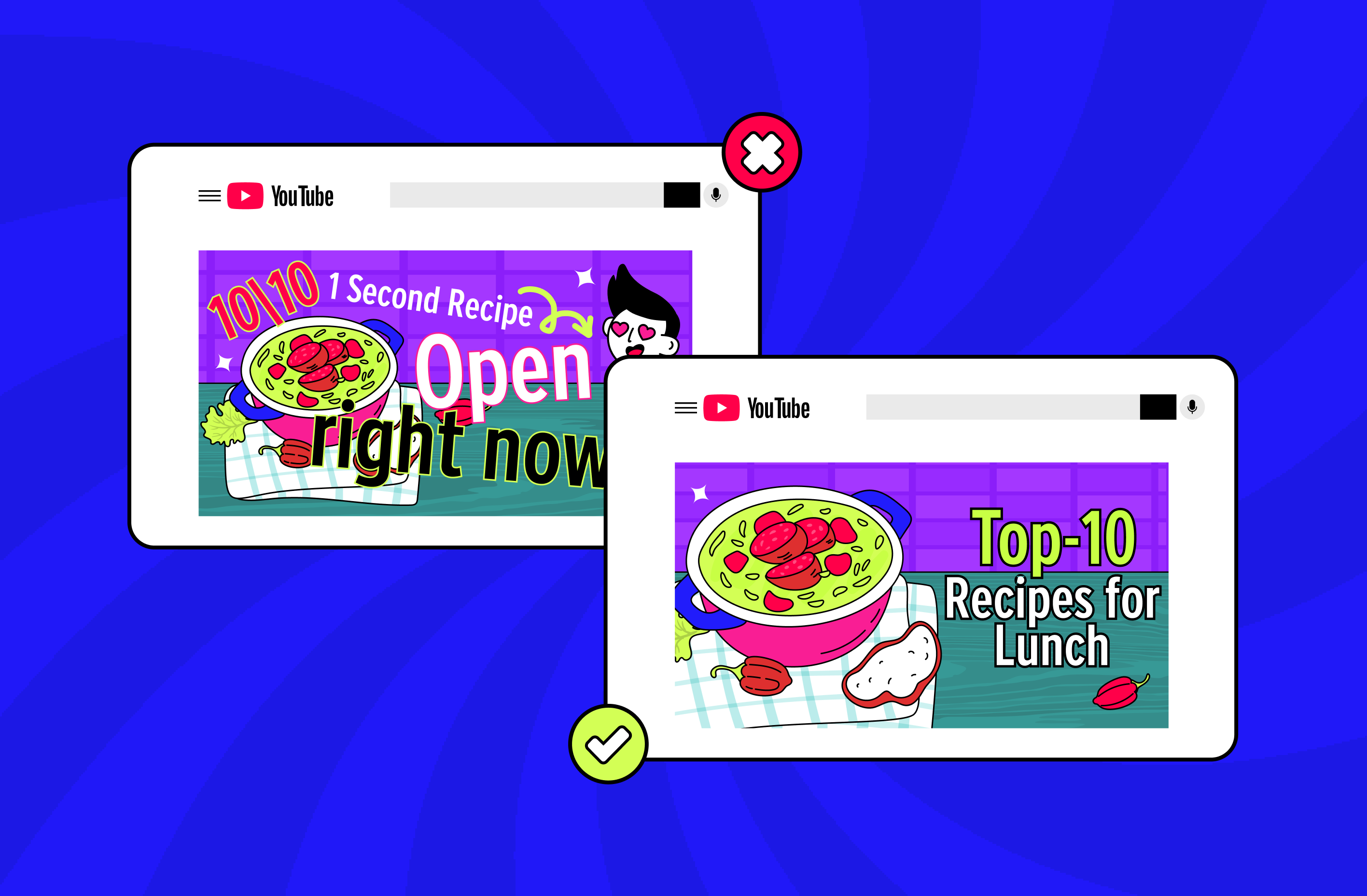
If your long-form content has a slow, meditative pace (it’s typical for faceless and silent vlogs), your faceless Shorts with, say, 50 cuts in 30 seconds will create cognitive dissonance for your target audience. Conversely, an audience accustomed to a frantic pace of visuals won't be satisfied after clicking on your 30-minute video with smooth frame changes. So, this will lead to the YouTube retention drop.
How The Algorithm Reads Audience Behavior
YouTube algorithms meticulously track the moment a viewer switches from Shorts to your long-form video. They understand that traffic came from the Shorts Feed and expect the viewer to have the same behavioral patterns as a loyal audience.
However, if this viewer immediately closes your long-form video, the algorithms conclude that your channel cannot meet their needs. And when this trend becomes widespread, it leads to a sharp drop in the retention curve. As a result, this leads to specific YouTube Shorts problems. The platform stops showing your new long-form videos in recommendations, even to your old audience, deeming them low-quality content. Actually, this explains how Shorts affect recommendations.
Signs Your Shorts Are Harming Your Channel
You can identify Shorts that harm your channel by analyzing the dynamics of just a few metrics:
- Dropping click-through rates for your long-form videos. If your new long videos receive a low CTR on the homepage or in recommendations, the problem is likely with incompatible subscribers from Shorts.
- Weak conversion from the Shorts feed. If your traffic source analytics show that only a few viewers come from the Shorts feed via links or your profile, this means Shorts kills your long-form content.
- Uneven audience retention graphs. If you notice a sharp drop in retention in the first 30 seconds of your long-form videos (especially with new audiences), this is a common sign that viewers are not finding the content they want.
- A sharp decline in the returning viewer rate. If the number of returning, loyal viewers (we're talking about those who regularly watch your channel) is dropping, it means their recommendations are overflowing with irrelevant content.
How to Fix It: The “Content Bridge” Strategy
This Shorts strategy fix involves creating a bridge between the need for entertainment (which Shorts address) and the need for depth (which long-form videos provide audiences). Here's what you need to implement:
- Thematic consistency. Ideally, your Shorts should be micro-versions of your long-form videos that fully address your niche. For example, if you create historical overviews, your Shorts could feature shocking facts from a specific era, instead of irrelevant characters who simply happened to be on the agenda.
- Content bridges. It's best to conclude each Short with a phrase like, “For a full analysis of this situation/problem, watch my new video (link in the description).”
- Shorts series. You can also try creating a series of 3-5 Shorts, each teasing a single topic from the long-form video. This will help you generate interest and ensure conversions from the audience that correctly understands the context.
- Consistency in style/tempo. If your long-form video is slow, your Shorts should be too. Also, if you have a faceless vlog, you should use consistent fonts, color schemes, and music transitions across all formats. This enables reinforcing your branding without being tied to the personality-driven nature of personalized channels.
Shorts That Help Long-Form Videos Grow
To avoid flying blind, you can simply choose one of the following short-form content formats. This will ensure you reach only a highly relevant audience:
- Educational micro-lessons, which are short but complete explanations of how to solve a problem (viewers who want more details will move on to the full-length lesson). Here’s a great example of such a channel – Wrath of Math. In some of Shorts, the author briefly covers interesting mathematical facts, which are described in more detail in full-length videos (links to which he attaches in the description).
- Contextual bridges, which are essentially short videos that highlight the most striking or challenging moment from your long-form video (you can enhance their impact by adding a phrase like, "Watch why it happened in my full video"). An excellent example of such a channel is Mukbang Pari. The couple behind this vlog uses Shorts to compile the funniest moments from their food challenges, encouraging viewers to watch the full-length videos.
- Storyline leads, which are videos inspired by your niche and serve as teasers or riddles, the answers to which are revealed only in your long-form content. Actually, this advice is great for travel vlogs like Randy. In her Shorts, she showcases the most challenging moments from her travels, revealing their details in long-form videos.
When It’s Best to Launch a Separate Shorts Channel
Sometimes, audience segmentation on YouTube is too difficult to implement. So, reconciling the two types of viewers for Shorts and long-form videos proves impossible. This is generally typical for educational channels, where no Shorts can accommodate even a teaser for a problem. In this case, it makes sense to consider creating a separate channel. Here's how to determine the need:
- Conduct A/B testing by trying the aforementioned content bridge for one month;
- If your long-form metrics have improved, continue publishing both Shorts and regular videos on your existing channel;
- If CTR and retention for your long-form content continue to decline, it's worth considering launching a separate channel. This is generally a reasonable practice if the topic of your Shorts is significantly different from the topic of your main content. This will help prevent Shorts from hurting long videos.
Conclusion
YouTube's algorithms are constantly evolving. So, it's clear why viral Shorts, if they don't align with the specifics of your core content, can quickly lead to a drop in retention. That's why, when building your Shorts vs long-form strategy, you need to start by moving away from chaotic Shorts and toward well-thought-out content bridges. By the way, if you want to maximize overall watch time through 24/7 YouTube streams, you can try Gyre. It will help you implement them seamlessly and quickly scale across the platform.