 12 min read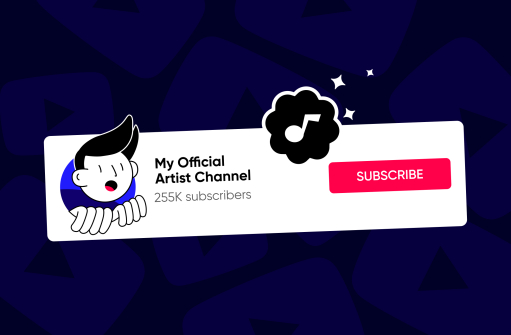

TL;DR
- An Official Artist Channel (OAC) merges the subscribers and content from your owned channel, your auto-generated Topic channel, and your Vevo channel into one artist channel with a music note next to the name.
- Eligibility runs on distribution, not audience size. You need one officially distributed release, a channel dedicated to a single artist or band, a clean policy record, and a qualifying partner relationship.
- There is no application form on YouTube’s side. Your distributor, label, or a Music Service Partner submits the request for you.
- Not every distributor still handles it. DistroKid and TuneCore run self-serve claim flows in their dashboards; CD Baby stopped processing OAC requests in March 2025.
- OAC is not the gray checkmark. Verification requires 100,000 subscribers and confirms identity only, while OAC has no subscriber threshold and reorganizes your entire music presence.
- The claim is one-way. OAC status can’t be transferred to a different channel, and an active Community Guidelines strike drops the channel back to standard until it clears.
- Approval commonly takes up to six weeks, and the extra toolset includes Analytics for Artists, a discography section, a merch shelf, and concert ticketing.
What Is a YouTube Official Artist Channel?
An Official Artist Channel, or OAC, is a program status applied to a channel you already own. It doesn’t create a second channel and it doesn’t replace your uploads. What it changes is how YouTube treats your music presence across the platform: instead of several separate destinations competing with each other, everything routes to one place.
Understanding the mechanics before you apply is worth the ten minutes, because the merge is the whole point. When YouTube grants an OAC, it consolidates subscribers from your Topic channel, your Vevo channel (if you have one), and your existing channel into your artist channel. The subscribe button and the subscriber count stop appearing on the old destinations. Many artists see their subscriber number jump on the day the merge lands, simply because counts that were split for years finally add up.
A distributor, in this context, is the service that delivers your recordings to streaming platforms on your behalf. Your distributor is also the party that gets you an OAC, which is why the relationship matters well beyond royalty splits.
What you get on top of the merge:
- One destination for music videos, art tracks, live sessions, and covers, instead of a Topic channel that fans stumble onto by accident.
- Artist-specific shelves that organize your catalog by release rather than by upload date.
- Analytics for Artists, plus merch and ticketing integrations that regular channels don’t get.
One caveat that rarely makes it into guides: gaining an OAC can remove access to features reserved for non-OAC channels, such as Ask Studio. That trade is real, so check what your channel currently relies on.
By the way, if you want to get even more valuable insights for your music channel, be sure to read the guide to growing a music channel on YouTube.
OAC vs. a Verified Channel: Two Different Things
These get confused constantly, and the confusion costs artists time. They’re separate programs with separate criteria and separate outcomes.
The gray checkmark is channel verification. It’s open to any channel type, the bar is 100,000 subscribers plus two-step verification and a complete public profile, and it confirms one thing only: this channel belongs to who it says it does. It grants no extra features and no algorithmic treatment.
The music note is OAC. There’s no subscriber threshold at all, so a channel with 200 subscribers and one distributed single can qualify while a channel with 400,000 subscribers and no distributor relationship cannot. And unlike verification, OAC actively restructures your catalog by merging channels and adding artist tooling.
An artist can hold both. They’re granted through different processes, and neither one implies the other. If the checkmark is what you’re after for a non-music channel, our breakdown of how YouTube verification works in 2026 covers the application path in detail.
How to Get a YouTube Official Artist Channel
The requirements changed since most guides on this topic were written, and the old three-releases rule no longer reflects what YouTube publishes. Here’s the current picture.
Eligibility Checks
YouTube lists three baseline requirements. You must own and operate a single artist’s or band’s channel focused on that artist’s music, have at least one official music release on YouTube delivered by a distributor or label, and keep the channel compliant with Community Guidelines, Terms of Service, and copyright policies.
On top of that, you need at least one of the following:
- You work with a YouTube Partner Manager.
- You’re in the YouTube Partner Program.
- You’re part of a label network that works with a Partner Manager.
- Your music is distributed by a partner listed in the YouTube Services Directory for Music Partners.
YouTube also recommends at least one publicly uploaded video on the channel beyond your distributed releases. Requests from channels with no public uploads can be rejected outright or pushed into additional verification. Note that Shorts don’t satisfy this on DistroKid’s side, so a full-length upload is the safer bet.
Requesting the OAC Upgrade
You can’t submit this yourself. The request goes through your label, your distributor, or a Music Service Partner from the Services Directory if you have neither. The practical sequence:
- Match your channel name to your artist name exactly, including capitalization and any special characters. A mismatch is the most common reason a claim stalls.
- Confirm at least one release is live on YouTube through your distributor, and give it a few days after the release date before you try to claim.
- Open the OAC section in your distributor’s dashboard, select the artist, and authenticate with the Google account that owns the channel you want upgraded.
- Wait. Both DistroKid and TuneCore tell artists to allow up to six weeks, and YouTube’s queue can stretch that further.
Where the Major Distributors Stand in 2026
The claim flow differs by distributor, and one large name has stepped out of the process entirely:
- DistroKid runs a self-serve claim under Features, then Special Access, then YouTube Official Artist Channel. It’s included on every plan, and the company can’t undo a claim once it’s made.
- TuneCore requires an Unlimited plan and adds its own conditions on top of YouTube’s: at least 15 subscribers on the channel, main-artist credit at the release level rather than a featured credit, and no label channels.
- CD Baby hasn’t processed OAC requests since March 2025 and hasn’t published a restart date. If CD Baby distributes your catalog and an OAC is the goal, you’ll need a different partner for it.
- UnitedMasters and other aggregators in the Services Directory, including Symphonic, Ditto, and AWAL, process requests through their own dashboards with their own tier conditions.
What an OAC Actually Gives You
The status is easy to describe in the abstract and harder to evaluate without knowing what each piece does. This is the practical breakdown:
| OAC feature | What it does | Why it matters |
|---|---|---|
| Channel merge | Combines subscribers from your owned channel, Topic channel, and Vevo channel | Ends the split audience problem; every fan sees every release |
| Music note badge | Marks the channel as the artist’s official home on YouTube | Separates you from fan uploads and lyric-video accounts in search |
| Discography section | Groups art tracks and videos by album and single | Fans browse your catalog by release instead of scrolling upload history |
| Official Music Videos shelf | Separates official videos from everything else on the channel | Keeps flagship content visible when the channel also hosts vlogs and sessions |
| Analytics for Artists | Reports on total music consumption, including fan uploads of your tracks | Shows where listening actually happens, not just what your own uploads earned |
| Merch shelf | Links approved merchandise retailers under your videos | Converts attention into revenue without sending viewers off-platform first |
| Ticketing | Surfaces upcoming concert dates on the channel | Reaches listeners at the moment they’re engaged with the music |
Your Topic channel may continue to exist after the merge, but the art tracks it hosted become accessible through the OAC, and the subscribe action lives on your channel only.
Customizing Your OAC for Maximum Impact
Once you’ve earned the status, the channel needs configuration to benefit from it:
- Set the artist avatar and branding so the channel reads as an artist page, not a personal account.
- Curate the discography. YouTube programs it automatically from delivered releases, but you can correct groupings and hide duplicates.
- Choose the featured video slot deliberately. It’s the first thing a new listener sees, and the latest upload isn’t always the strongest entry point.
- Build themed playlists for new releases, deep cuts, and live material.
- Connect the merch shelf and add tour dates once they’re confirmed.
Additionally, to maximize viewer engagement, you can learn how to use YouTube’s native tools and Google Trends.
Optimizing Content Strategy for OAC
An OAC removes friction, but it doesn’t generate demand. What it does give you is a single surface where every piece of activity compounds instead of scattering across channels. A few principles that hold up in 2026:
- Use Shorts as a discovery funnel into full tracks, and premieres to concentrate attention on release day.
- Publish between releases: behind-the-scenes footage, live sessions, and studio breakdowns keep the channel active during the long gaps that kill momentum.
- Read Analytics for Artists rather than channel analytics alone, since it captures listening that happens outside your own uploads.
The gap problem deserves attention, because it’s structural for musicians. A release cycle produces a spike, then weeks of silence while the next record gets made. A continuous broadcast fills that silence: Gyre broadcasts pre-recorded video as a 24/7 live stream on YouTube, so an artist channel can run a genre mix, a looped live session, or a visualizer set without anyone sitting at a desk. Our walkthrough on setting up a 24/7 music stream covers the file prep and stream settings.
One rule applies regardless of OAC status: stream only what you hold the rights to. Content ID scans live broadcasts in real time and there’s no claim-and-monetize path on live content, so a match interrupts or ends the stream instead of quietly redirecting revenue. Our guide to avoiding copyright restrictions on live streams covers the prevention workflow.
You will find more ideas and practices in the guide to an effective marketing strategy on YouTube.
Promoting Your Official Artist Channel
Here are some more great ideas on how to promote a channel on YouTube for artists:
- Sell merch and list tour dates through the official integrations rather than description links.
- Embed your YouTube videos on your website and social profiles so the OAC becomes the canonical destination.
- Organize collabs with other artists, which pulls their audience into your merged subscriber base.
- Promote releases with paid YouTube Ads targeted at listeners of adjacent artists.
Actively engage with your audience through the Community tab and comments. With a merged subscriber base, a single post now reaches everyone who ever followed any version of your presence.
Key Takeaways
- Audit the channel name first. It has to match your artist name character for character, and fixing it after a rejected claim costs weeks.
- Upload at least one full-length public video before you apply. An empty channel is a rejection risk, and Shorts don’t count toward it.
- Confirm your distributor still processes OAC requests before you build a plan around one. If it doesn’t, that’s a reason to evaluate a partner listed in the Services Directory.
- Decide which channel gets the status while you still have the choice. There’s no transfer, no reversal, and no second attempt on a different channel.
- Protect the strike record. A Community Guidelines strike suspends OAC status until it clears, taking the merged presentation with it.
- Treat the OAC as infrastructure, not a finish line. A merged channel only pays off if something keeps running on it between releases.
FAQ
How do I get a YouTube Official Artist Channel?
You apply through your music distributor, not through YouTube directly. DistroKid and TuneCore both run self-serve claim flows in their dashboards, while CD Baby suspended OAC processing in March 2025. Your distributor submits the request to YouTube on your behalf, and you need at least one release officially distributed to YouTube plus a channel dedicated to a single artist or band.
What’s the difference between OAC and verification?
OAC is built for musicians. It consolidates your music under one channel, adds a music note icon, and adds artist tooling such as Analytics for Artists. Verification is the gray checkmark available to any channel at 100,000 subscribers, and it proves authenticity without changing how the channel works.
Does an OAC give algorithmic advantages?
Not directly. YouTube doesn’t rank OAC content differently. The gain is indirect: a consolidated presence and an artist page in YouTube Music mean fewer dead ends for listeners searching your name, which lifts discoverability across your catalog.
Do I need subscribers to get an OAC?
YouTube sets no subscriber threshold. What it requires is officially distributed music on the platform and a distributor that supports OAC requests. Individual distributors can add their own minimums, though, and TuneCore asks for at least 15 subscribers on the channel before it will file a claim.