 10 min read

The YouTube Algorithm’s Evolution Over the Last Year
As you may know, today's algorithm is based on deep neural networks that are getting smarter every second. Here are the main changes that have occurred in it over the past year:
- AI contextual analysis. Neural networks can assess your content, analyzing visuals, tone, and production quality down to the last detail.
- Multi-format personalization. YouTube analyzes viewer interests across Shorts, streams, and long-form videos simultaneously, creating a unified recommendation profile.
- Priority for returning viewers. This is the main metric today. If someone watches you once and comes back for your next video, the algorithm will evaluate this in your favor.
- From clicks to viewers’ satisfaction. While the platform previously relied on click-through rate, its algorithms are now increasingly tied to satisfaction. This means both whether a video was clicked and whether the user wanted to watch it to the end, share it, leave a comment, subscribe, watch the next videos, and so on.
Why Creators Still Believe Outdated Myths
So why do even experienced content creators continue to make mistakes and believe myths? We've identified three main reasons:
- Too old insights. You rely on a guide on promotion recorded in 2021, which is the Stone Age for YouTube. Beginners often learn from outdated courses that teach them the best practices from a time when Shorts didn't even exist.
- Strategic inertia. You once identified a strategy that brought you your first thousand subscribers. You cling to it blindly, like a lifeline. But everything has changed, and your lifeline has long since deflated. You're simply afraid to try new things because the old simply seems safe and familiar.
- Looking for an external enemy. It's psychologically easier to blame a shadowban than to admit that your content no longer resonates with your audience. Indeed, myths provide a convenient excuse for failure, as it's always easier to believe in a universal conspiracy than to believe that your cover or main content is no longer interesting to your target audience.
The Most Common Misconceptions About Growth
It's time to debunk the biggest myths. Are you ready for this?
Myth #1: Posting more often guarantees more views
Many people think something like this: “If I upload new videos every day, the platform will notice me”. But... Just imagine a bakery. You can bake 100 simple loaves a day or 5 perfect cakes. Which do you think will attract customers more quickly? YouTube works the same way. If you exhaust your resources with daily content, its quality tends to decline. The algorithm sees low retention on each video and stops recommending them to your target audience.
Myth #2: The algorithm suppresses small channels
Are you naive enough to think that the platform only benefits from promoting the big players because their advertising is more expensive? However, if you create a new channel and upload a brilliant analysis of a new gadget, while a channel with a million views posts a boring alternative, your video will retain more viewers. Moreover, it will overtake the million-viewer mark in just a couple of days. The algorithm doesn't care about the size of your channel. It wants content that keeps viewers engaged. New channels often get test reach, and if you fail, it's not the channel's size that's to blame, but the quality of your content.
Myth #3: Tags and keywords drive visibility
Are you spending 40 minutes choosing tags, hoping that they'll help boost your vlog's visibility? Relax: the algorithm has long been analyzing the content itself – that is, the audio and every frame. Tags only help in 1-2% of cases, when you've made a typo in the title. Most traffic comes from recommendations, and tags don't work there at all. Only the title and preview do that job.
Myth #4: The first 24 hours decide your video’s fate
The idea that “if a video doesn't skyrocket in views within 24 hours, it's dead” is fundamentally wrong. In reality, your content can “sleep” for up to six months – usually, those classified as evergreen content. Also, today, the algorithm is constantly re-evaluating old videos with new audiences. And, if your video's topic suddenly becomes a trend after three months, the platform will start showing it with increased enthusiasm. Therefore, don’t delete it just because it didn't generate tens of thousands of views on the first day.
Myth #5: Long videos always perform better
What about the idea that you should make videos 20 minutes or longer to maximize watch time? On the other hand, if you have a 20-minute video with 15 minutes of fluff, viewers will simply leave after three minutes. Meanwhile, if you upload a dynamic 5-minute video, many will likely watch it to the end.
Generally, the platform values retention and satisfaction. That's why long videos are only good when they're genuinely engaging every second.
What YouTube Actually Prioritizes Now
Forget about trying to hack the system. This year, YouTube's official position is simple: the algorithm doesn't look for viewers for your content; it looks for content for specific viewers. This is a fundamental shift from a "Push" system to a "Pull" one. More precisely, here's what the platform currently prioritizes, according to official statements from the YouTube team (we’ve found the Creator Insider channel, where official YouTube employees share facts on how it works):
- Satisfaction score. Watch time used to be the most important metric. But over time, YouTube noticed that people can watch videos they don't actually enjoy for a long time (for example, when they're clickbait). That's why the platform now relies on the so-called satisfaction-weighted discovery approach. The algorithm analyzes responses to post-video surveys ("Did you like it?"), as well as indirect signals, such as likes, shares, and whether the viewer has clicked the "Don't recommend channel" button.
- Contextual signals (time and device). The algorithm now takes into account when and on what device viewers watch videos. For example, if they typically watch news on their smartphones in the morning and long-form documentaries on big screens in the evening, the platform will tailor their recommendations to this pattern.
- Bridge content. YouTube has finally combined viewer behavior data for all video types. This means that if a viewer is hooked on your Shorts, the algorithm is much more likely to suggest your long-form content to them on the homepage.
- Test reach for newcomers. The myth that the platform ignores new channels has been officially debunked. The updated algorithm provides test reach for any new video to understand how the seed audience responds. That's why today, it's not the size of your channel that matters, but how quickly you engage the small group of people who the algorithm demonstrated your video to in the first few hours.
Metrics That Truly Influence Recommendations
Forget about likes and comments for a minute. Here's what you should look at in your analytics:
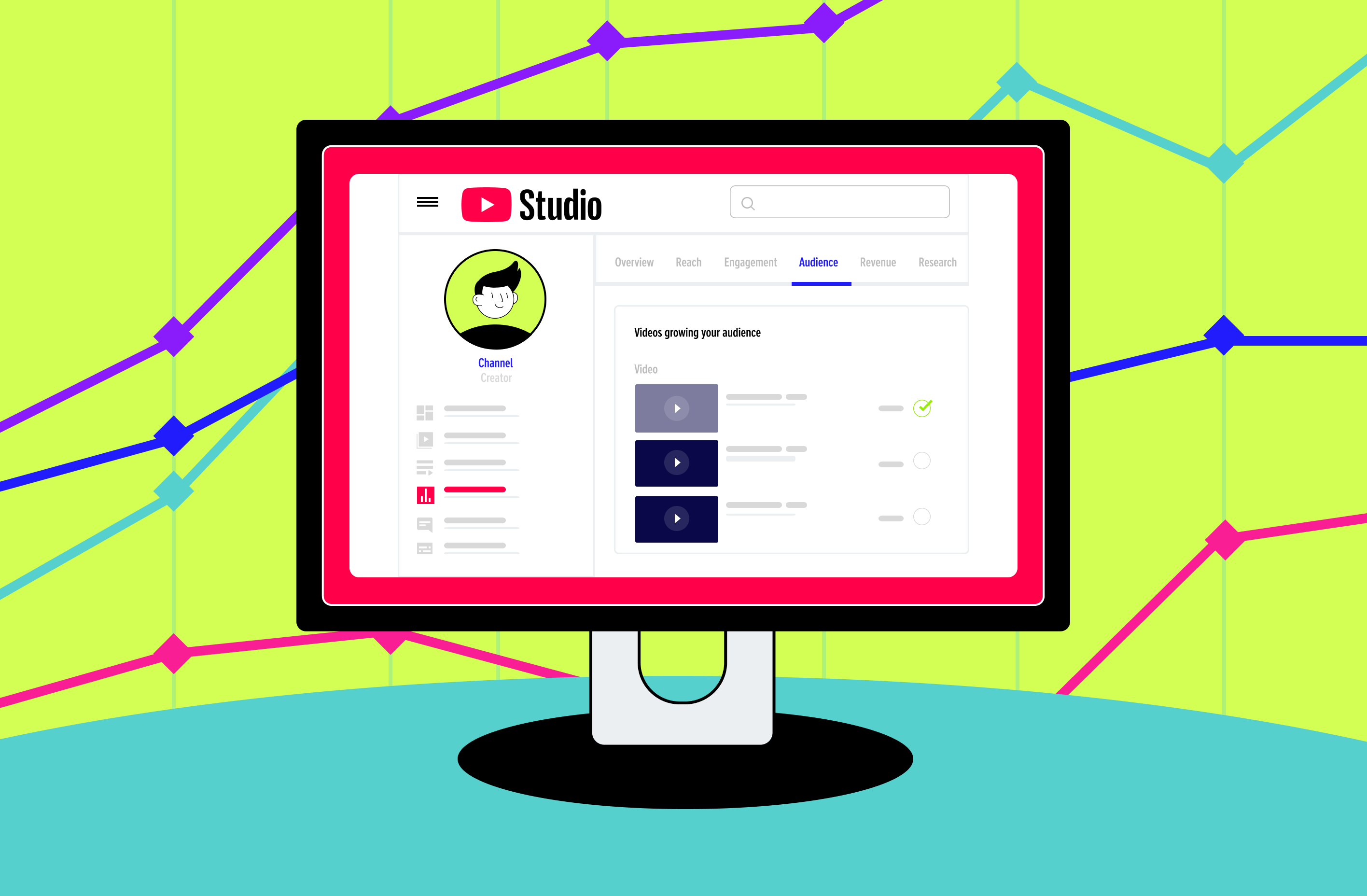
- Retention curve. Open your analytics. Look for moments where people leave and avoid them in your next videos;
- Click-through rate and average view duration. This pair should be high, and nothing else. A high CTR with low retention is clickbait. YouTube penalizes this.
- Returning viewers. If this number is growing, your channel is doing well. If not, you're relying on one-time traffic, which YouTube doesn't like.
- New viewers engaged via recommendations. Analytics will also show you what percentage of traffic comes from recommendations versus search. The fact is that now, the growth is only possible through recommendations.
How to Adapt Your 24/7 Stream Strategy
Did you know that YouTube absolutely loves 24/7 streams? A stream is a signal to the algorithm: “Hey, this channel is active right now!” Streaming keeps people on the platform for a long time. A really long time. It generates a huge amount of watch time, which tells the platform: “This channel does bring benefits!” Therefore, it starts to recommend your regular videos as well.
At the same time, you shouldn’t loop the same 5-minute video – that's the best recipe for bans. It's far better to focus on the following concepts of YouTube 24/7 streaming:
- Something like a radio or TV channel. You can create a themed collection – for example, if you have a programming channel, you could run a stream like “Best Python Tips with Lo-Fi Music.”
- Interactivity. Even if you use pre-recorded content, you can still interact with your audience via chat. Even if you're not sitting at your PC, there are bots for this. The key is to create a sense of live presence.
- Pre-recorded videos. Yes, you can use your best videos, but how long should they be? Generally speaking, it's best not to make the cycle shorter than 2-3 hours, as the algorithm needs time to index the stream and start building an audience. If your cycle is only 15 minutes long, people who return to your stream a second time, half an hour later, will see the same thing and then leave. The ideal cycle is 4 to 8 hours. This way, your audience will always find something fresh, while you'll get incredible live streaming growth.
How Gyre Helps Creators Grow Smarter
So, let’s find out how to stream 24/7 on YouTube without going crazy setting up OBS on your home PC. It's simple – you should use Gyre, a cloud-based 24/7 streaming service designed specifically for streaming pre-recorded content. And yes, you don't need to keep your computer on or even have a powerful internet connection, because with the Gyre for YouTube, you'll have:
- Everything in the cloud – you upload Gyre pre recorded videos, create a playlist, and Gyre will automatically launch the stream using its server capacity.
- Multiplatform support – you can run the 24/7 stream on YouTube and several other platforms simultaneously, i.e., you can run the Twitch 24/7 stream and the YouTube 24/7 stream in sync.
- Steady growth in metrics – content creators using Gyre report an increase in total channel watch time within the first month. And yes, this is despite other common strategies not working as expected!
Conclusion
Stop believing the myths about everyday posting and discriminating against newcomers. It's much better to take advantage of a completely legal cheat code for capturing your audience's attention – 24/7 YouTube live streams, which Gyre makes available to everyone. Don't wait for your competitors to do it before you. Be one of the first to run Gyre live streams. Try the Gyre demo for free right now!