 15 min read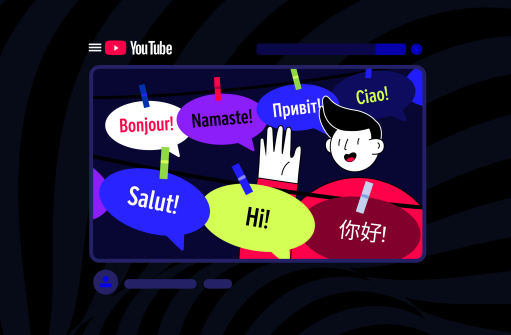

TL;DR
- Upload a different thumbnail image per language track, and YouTube automatically serves the version that matches each viewer's language setting.
- The feature is tied to multi-language audio (MLA): no language tracks, no localized thumbnails. As of 2026, access is rolling out broadly to channels with MLA enabled.
- Localizing a thumbnail goes beyond translating text. Typography, color meaning, faces and cultural cues all shift the click decision.
- The biggest CTR gains go to channels where 30%+ of watch time already comes from non-primary language viewers.
- A/B test each localized version on its own. A hook that works in English can actively reduce CTR in Brazil, Japan or Germany.
What Is YouTube's Multilingual Thumbnail Feature?
YouTube multilingual thumbnails are localized thumbnail images attached to each dubbed audio track on a video. According to YouTube's official Help documentation, the platform automatically shows each viewer the thumbnail that matches their language setting. The same upload can greet an English-speaking viewer with one image, a Spanish-speaking viewer with another, and a Japanese viewer with a third.
Here's how it works:
- The English version can have a U.S.-style design with English text.
- The Spanish version might include translated text and culturally relevant visuals.
- The Arabic version could use right-to-left text alignment.
- The Japanese version might adapt typography and imagery to local aesthetics.
Access status in 2026: who has it now
The feature is not brand new. YouTube piloted localized thumbnails back in 2023 with a small group of large creators, then expanded access through late 2025 and into 2026 to channels that already have multi-language audio (MLA) enabled. If your channel has MLA, you very likely have multilingual thumbnails too. If the option doesn't appear in YouTube Studio, your channel hasn't been granted MLA access yet, which is the gating dependency, not the thumbnail feature itself.
Eligible creators get a notification inside YouTube Studio when the tooling becomes available on their channel. The upload point lives on the Languages page next to each audio track.
Why Localized Thumbnails Are a Game Changer for Global Reach
Visual Localization Drives Higher Engagement
A thumbnail is the first visual contact with your video. Seeing a familiar language and culturally relevant visuals instantly builds trust for an international YouTube audience.
Localized thumbnails can:
- Increase click-through rates
- Reduce bounce rates by setting accurate expectations
- Improve discoverability in local search results
Case study: what early adopters saw
The names that come up most often in coverage of YouTube's multi-language rollout are MrBeast, Mark Rober and Jamie Oliver, the original pilot creators YouTube cited when it expanded the feature in late 2025. According to YouTube's own data, Jamie Oliver's channel tripled in views after adding multi-language audio tracks, and channels on the program saw over 25% of their watch time come from non-primary language viewers on average.
The thumbnail layer arrived on top of that as a separate experiment with a select group of creators, on the same logic: if dubbed audio unlocked a market, a thumbnail that already spoke to that market would convert more of the impressions YouTube was now serving there.
Two caveats before treating any of these numbers as a target. First, the "tripled views" figure comes from one channel and was driven by audio more than thumbnails alone; reading it as a thumbnail benchmark misframes the data. Second, MrBeast and Mark Rober operate at a scale (and with a thumbnail budget) most creators won't match. The lift you'll personally see depends on how much of your existing watch time is already non-English and how aggressively you treat each market as its own design problem.
Build a Stronger International Brand
With YouTube content globalization, you're not only speaking another language; you're visually connecting with each region. A localized thumbnail makes you look like a local storyteller rather than a global broadcaster passing through.
This kind of work strengthens brand perception and positions you as a creator who understands the markets you publish into.
Complete the Global Viewer Experience
YouTube multi-language features already include dubbing, captions, and translated titles. Now, YouTube thumbnail localization closes the gap by aligning visuals with language. It turns video localization into a complete package:
- Localized audio
- Accurate subtitles
- Translated metadata
- Matching visuals
Run together, these layers create a more consistent viewing experience and widen YouTube international reach.
Where Gyre fits
If you run 24/7 live channels on YouTube with Gyre, broadcasting pre-recorded videos as a live stream, localized thumbnails matter even more. A single 24/7 stream loops in front of audiences across every timezone and language, so pairing each dubbed track with a market-specific thumbnail means the same stream can pull a German viewer at 3 a.m. and a Brazilian viewer at noon with totally different visual hooks. No extra channels required.
Step-by-Step: How to Upload Multilingual Thumbnails on YouTube
Localized thumbnail uploads are tied directly to the multi-language audio toolset. YouTube only exposes the per-language Thumbnail field to creators whose channels already have access to multiple audio tracks, either uploaded manually or generated through YouTube's AI auto-dubbing. If your channel doesn't have MLA access yet, the Thumbnail column on the Languages page won't accept uploads, regardless of how many translated titles or subtitles you add.
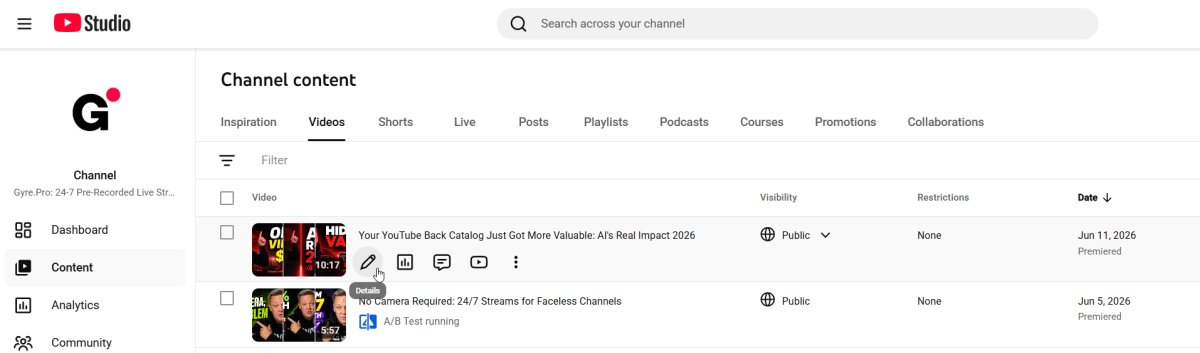
- Open Content in YouTube Studio. From the left sidebar, go to Content and find the video you want to localize.
Open the video's edit panel. Hover over the video row, and in the row of action icons that appears under it, click the pencil icon (Details).
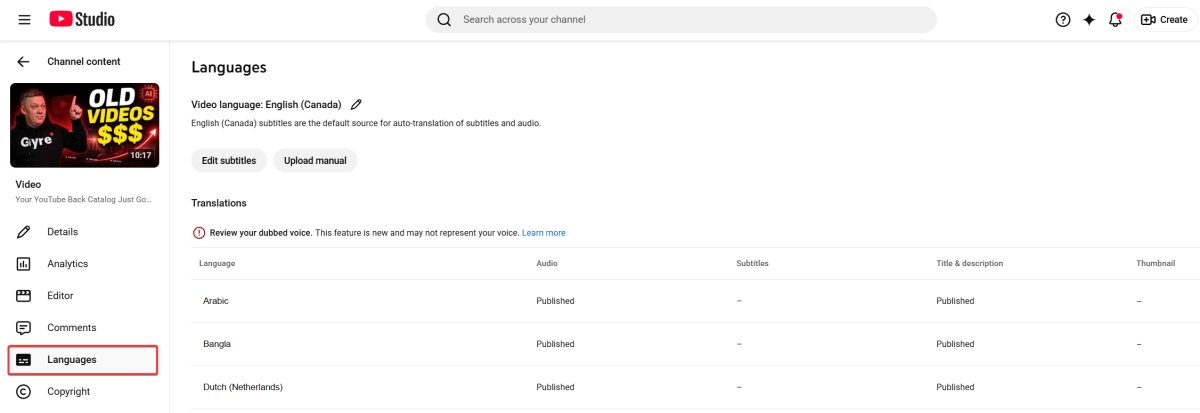
Switch to the Languages tab. In the left menu of the video, click Languages. The Translations table opens with columns for Language, Audio, Subtitles, Title and description, and Thumbnail.
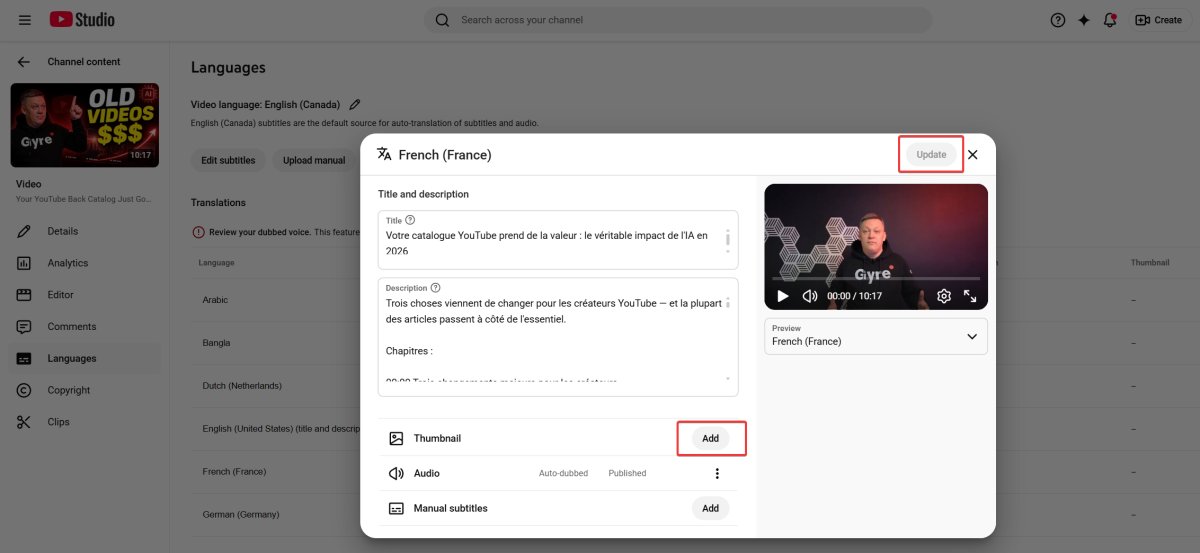
- Click the language row you want to localize. Pick the language whose Audio column shows Published, which means a dubbed track is already live. A side panel opens with Title, Description, Thumbnail, Audio, and Manual subtitles fields.
- Upload the localized thumbnail. Next to Thumbnail, click Add and upload your language-specific image. The button switches to Delete once the file is in, so you can replace it later if a variant performs poorly.
- Preview before publishing. The right side of the panel shows a video preview with a language dropdown. Flip through your languages to check how the thumbnail, title and description read together in each market.
Click Update. The button activates in the top-right corner once changes are pending. There is no separate approval queue: the localized thumbnail goes live immediately, and YouTube serves the matching version based on each viewer's language preference.
Design Tips for Language-Specific Thumbnails
Translate text clearly, then check it twice
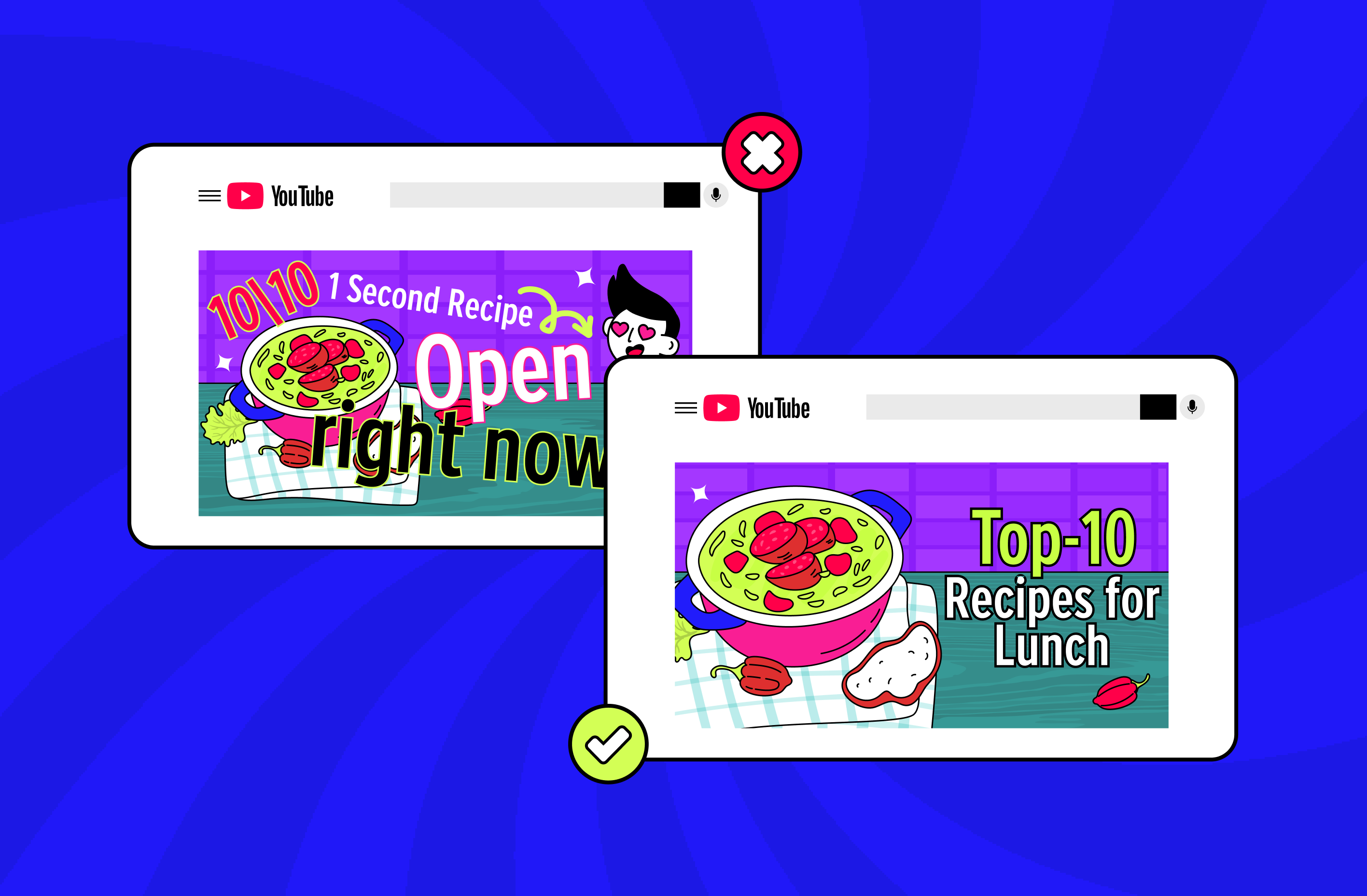
Avoid raw machine translation. A literal swap kills the hook: "This blew my mind!" pushed through translation can come out as something closer to "This exploded my brain," which reads as violent rather than excited. Find the native phrase that carries the same emotional charge.
Length matters too: German translations can expand by up to 35% and French by 20–25% compared to the English source, so leave breathing room or shrink the font for those versions before the layout collapses.
Adapt Visuals to Local Cultures
Colors, icons, and humor vary by culture. Swap elements to fit the target audience while staying relevant to localizing YouTube content. A quick reference for the most common decisions:
| Language / Region | Typography | Color meaning | Face / expression norms |
|---|---|---|---|
| English (US/UK) | Bold sans-serif, short hooks under 12 characters | Red = urgency, excitement; yellow pops on dark mode | Exaggerated open-mouth, shocked face works |
| Spanish (LATAM) | Slightly longer copy fits; rounded, friendly sans-serif | Warm reds and yellows read positively; green = freshness | High-energy, smiling expressions; group shots perform well |
| Portuguese (Brazil) | Bold, condensed sans-serif to handle ~25–30% longer text | Bright green, yellow, blue read culturally native; avoid muted tones | Warm, expressive faces; emotion lands harder than shock |
| German / French | Allow ~30% more space than English; condensed faces help | Cooler palettes read as quality and trust; red used more sparingly | Restrained expressions outperform over-the-top shock |
| Japanese | Vertical or horizontal mix; heavy katakana / kanji weight | Red = celebratory, not warning; white space is a design choice, not waste | Softer, more reserved expressions; cute (kawaii) cues outperform shock |
| Arabic | Right-to-left layout, mirror the composition; allow generous line height | Green carries strong cultural weight; gold reads as premium | Modest framing; avoid expressions that read as mocking |
| Hindi | Devanagari script needs more vertical space than Latin caps | Saturated oranges, reds and yellows read as festive and trustworthy | Family-oriented framing and warm expressions outperform stunts |
Keep Your Brand Identity Consistent
Hold logos, color schemes and your own face steady across every language version, so viewers recognize the content instantly even when the text on top changes. Localization adapts the surface, not the brand underneath.
Test, Analyze, and Optimize
Track click-through rates across languages. Some markets prefer bold text; others respond to more visual storytelling. YouTube Analytics breaks down views and watch time by audio language, so you can see which localized thumbnail is actually pulling its weight and which one is dragging the average down.
Key takeaways
- Multilingual thumbnails let you show a different thumbnail image per viewer language, set in YouTube Studio under the Languages tab.
- Localizing a thumbnail goes beyond translating text. It includes adapting visual cues, colors and expressions for the target culture.
- CTR improvements from multilingual thumbnails are most significant for channels with 30%+ international audience share.
- Multilingual thumbnails pair with multilingual audio tracks for a fully localized viewer experience; they're not a standalone feature.
- A/B test each localized thumbnail separately. What works in English may actively reduce CTR in other markets.
Translated thumbnails are more than a design update. They're how the visual layer finally catches up to dubbing and captions. Add them to your multi-language audio setup, test each market on its own, and the same upload starts working for audiences your default thumbnail used to leave behind.
FAQ
Who has access to multilingual thumbnails on YouTube?
As of 2026, multilingual thumbnails are rolling out broadly to channels that already have multi-language audio enabled. Open YouTube Studio, go to Languages in the left menu, and check whether you can upload an alternate thumbnail next to each audio track. If you see the option, you have access.
How many language versions of a thumbnail can I upload?
YouTube supports one thumbnail per language track added to the video. Five language tracks means up to five different thumbnails on the same upload.
Do multilingual thumbnails affect SEO or search rankings?
Not directly. They don't change how the algorithm indexes your video. A higher CTR from a better-localized thumbnail does send a positive engagement signal, though, which feeds recommendations in that language market.
Do I need to create separate channels for different languages?
No. Multilingual thumbnails and audio tracks let you serve multiple language audiences from a single channel and a single video, which is the whole reason the feature exists. Separate channels are now a workaround, not a requirement.