 15 min read

TL;DR — YouTube title A/B testing in 2026
- YouTube's native A/B testing tool, Test and Compare, lets you test up to 3 title variants, 3 thumbnails, or 3 combined title + thumbnail packages on the same video.
- The winner is decided by watch time per impression, not raw click-through rate (CTR). A title that earns clicks but loses retention will not win.
- Tests typically need 1,000–5,000 impressions per variant for a statistically significant result and run up to two weeks.
- Available to all creators with Advanced Features enabled in YouTube Studio. No YouTube Partner Program requirement. Desktop only.
- A/B testing has the biggest impact on videos with good retention but low CTR — a clear title/thumbnail mismatch.
From Thumbnails to Titles: How Test and Compare Evolved
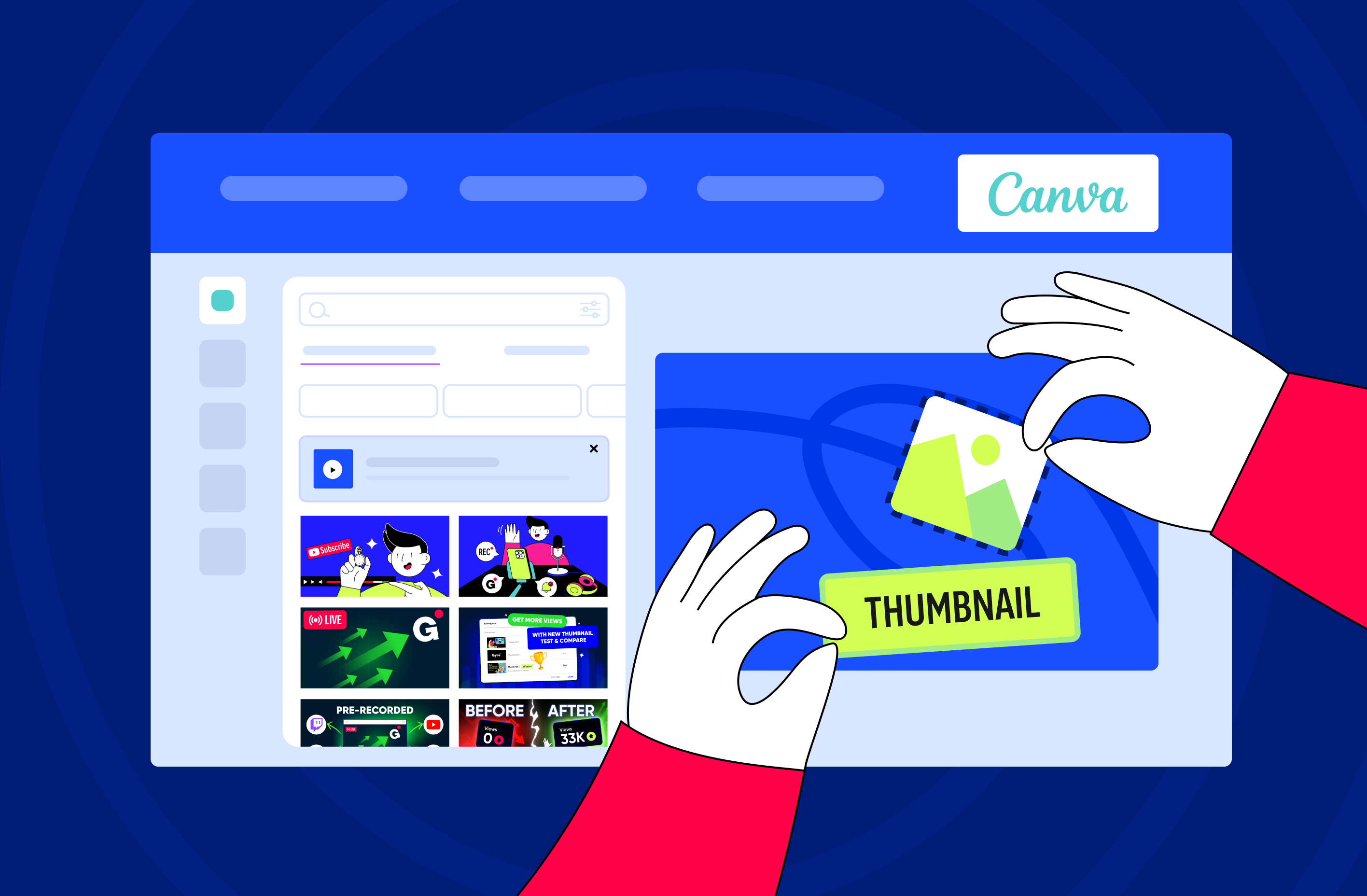
When YouTube introduced thumbnail A/B testing, it solved one half of the packaging problem. Thumbnails grab attention, but titles seal the click and set viewer expectations. With the December 2025 expansion, Test and Compare now covers both: you can test titles alone, thumbnails alone, or full title + thumbnail combinations from the same interface. This unified workflow means CTR optimisation and retention testing finally live under one tool instead of two separate experiments.
Why Title Testing Matters
A title is your first promise to the viewer. Get it wrong and even a great thumbnail can't save the click. Or worse, the click happens and the viewer bounces within ten seconds, training the algorithm to push your video less. Title A/B testing replaces gut feeling with measured viewer behaviour and shows you which framing (keyword-led, emotional, or curiosity-driven) your specific audience responds to.
Channels that already publish steady, evergreen content benefit the most. If you run 24/7 live streams of pre-recorded video through a tool like Gyre, broadcasting your back catalogue as continuous live streams on YouTube, Twitch, and Kick, those live archive videos can be A/B tested too once they're saved as long-form. Testing titles on stream replays can squeeze noticeably more CTR out of content you've already produced.
How to Set Up a Title A/B Test in YouTube Studio
Before you start, confirm you meet the two eligibility checks: Advanced Features must be enabled, and the video has to be a public long-form upload, a podcast episode, or a livestream archive saved as a video. Shorts, scheduled lives, Premieres (until they convert), Made for Kids, age-restricted, and private videos are excluded.
- Sign in to YouTube Studio on desktop and open the video you want to test.
- In the Title box or under Thumbnail, click A/B testing.
- Choose Title only, Thumbnail only, or Title and thumbnail.
- Upload up to three variants. Your existing title counts as one of the three.
- Click Done. YouTube starts rotating variants across viewer segments automatically.
One important note from YouTube's own documentation: if you change the video's title or thumbnail manually while a test is running, the test stops automatically and you have to restart it.
How to Read A/B Test Results
Results live in two places: the video's Details page and the Reach tab inside YouTube Analytics. To open the full report mid-test, go to the video → Analytics → Reach → under "How your A/B test is going", click Manage test.
YouTube reports one of three outcomes based on watch time share:
| Result | What it means | What happens to your video |
|---|---|---|
| Winner | One variant clearly outperformed the others with statistical significance. | The winning variant is automatically applied to all viewers. |
| Performed the same | The test completed but variants finished within margin of error. | You pick the one you prefer; the default stays unless you change it. |
| Inconclusive | Not enough statistical difference — usually too few impressions or variants too similar. | The first variant you uploaded is set as default. You can override manually. |
YouTube also holds back a small control group that only sees your default title/thumbnail. Their performance is excluded from the experiment maths so the comparison stays clean.
Best Practices: How Long to Run a Test and How Many Impressions You Need
The single biggest reason creators get "Inconclusive" verdicts isn't bad variants. It's a thin impression count. Plan around these numbers:
- Aim for 1,000–5,000 impressions per variant before reading results. Below that range, day-of-week traffic patterns and audience-segment noise drown out the real signal.
- Let tests run at least two weeks when impression volume is modest. Weekday and weekend audiences behave differently, and a 3-day test can crown a "winner" that only suits Tuesday afternoon viewers.
- Pick the right videos to test. YouTube recommends testing older videos first to limit the impact on your channel's overall views while you learn what works.
- Make variants meaningfully different. Swapping one word rarely produces a winner — change the hook, the structure, or the angle.
- Don't stack changes. If you also tweak the description, end screen, or thumbnail (outside the test) during the experiment, you contaminate the result.
Watch Time Share vs CTR: Why YouTube Picks the Less Obvious Metric
This is where YouTube's tool surprises creators coming from traditional A/B testing. Most marketing tests optimise for CTR (clicks per impression). YouTube optimises for watch time per impression. The difference matters: a clickbait title can crush CTR while gutting retention, and YouTube's algorithm punishes that downstream. By picking the variant that produces the most total watch time per impression, Test and Compare rewards titles that are honest about the content, not just attention-grabbing.
The practical takeaway: stop optimising for "what gets the most clicks" in isolation. Optimise for "what gets clicks and keeps people watching long enough that the algorithm rewards the video." A title that brings in fewer but better-fit viewers will beat a clickbait variant in this system.
YouTube Native vs TubeBuddy vs vidIQ: Which Title A/B Testing Tool Should You Use?
Even with the native tool now widely available, third-party options still cover gaps. Here's how the three stack up in 2026:
| Feature | YouTube Test and Compare | TubeBuddy A/B testing | vidIQ |
|---|---|---|---|
| Title A/B testing | ✓ Native, free | ✓ (Legend plan) | Limited — no full A/B testing |
| Thumbnail A/B testing | ✓ | ✓ | ✗ |
| Description / tag A/B testing | ✗ | ✓ | ✗ |
| Winning metric | Watch time per impression only | Creator-chosen: CTR, watch time, engagement, or views | N/A |
| Statistical confidence threshold | Internal — YouTube decides | Set to 95% statistical confidence | N/A |
| Mobile access | ✗ Desktop only | ✗ Desktop only | ✗ Desktop only |
| Cost | Free | Paid (Legend plan) | Paid |
| Best for | Most creators — start here | Creators who want CTR-based winners or description/tag tests | Discovery, keyword research, competitor tracking |
For most channels, the native tool is enough. The strongest case for TubeBuddy in 2026 is when you specifically want to optimise for CTR rather than watch time, or when you want to test descriptions or tags, neither of which YouTube's native tool supports.
Smart Testing Strategies for Maximum Impact
- Start with your underperformers. The biggest CTR lifts come from videos with strong retention but weak click-through — your titles are mis-selling content that actually delivers.
- Test angles, not adjectives. Compare a keyword title to an emotional hook to a curiosity gap, not three variations of the same sentence.
- Keep a testing log. A simple spreadsheet of variant, result, impressions, and watch time share builds a pattern library for your niche over time.
- Pair title tests with thumbnail audits. If both feel off, run a full title + thumbnail combination test rather than two sequential single-variable tests.
- Resist clickbait. Watch time share punishes it. A title that overpromises will lose to a fair one almost every time.
Current Limitations You Should Know About
- No Shorts. If a video transitions to a Short after upload (3 minutes or less, square or taller), you lose access to existing and future A/B tests for it.
- Desktop only. No mobile YouTube Studio app support yet.
- One metric. Watch time per impression is the only winning criterion — you can't choose to optimise for CTR, engagement, or subscribers.
- Manual changes kill the test. Editing the title or thumbnail outside the testing tool stops the experiment.
- Thumbnail resolution downscaling. If any variant thumbnail is below 720p, YouTube downscales all experiment thumbnails to 480p — affecting how variants are judged visually.
Who Can Access the Feature in 2026
As of the December 2025 wide rollout, Test and Compare is available to all creators who:
- Have Advanced Features enabled in YouTube Studio
- Have a verified account (phone number or government ID)
- Are testing eligible video types — public long-form videos, podcast episodes, or saved live archives
YouTube Partner Program membership is not required. If you don't see the A/B testing option, check Advanced Features status first; that's the most common gating issue.
What This Means for the Future of YouTube Growth
Title A/B testing closes the loop on packaging. Combined with thumbnail tests and proper analytics-driven video group testing, creators now have a complete data-driven toolkit for optimising every video that goes up. Channels that lean into structured experimentation, testing two or three variants on every upload, keeping a log, and applying learnings to the next batch, compound their CTR and watch time gains in a way ad-hoc creators can't match.
For creators running 24/7 live streams of pre-recorded video through Gyre on YouTube, Twitch, and Kick, this matters in a specific way: the long-form video archives those streams generate are testable assets. Each saved livestream archive is another candidate for A/B testing, turning continuous broadcasting into a steady supply of optimisation experiments rather than one-off uploads.
Key Takeaways
YouTube title A/B testing in 2026 is no longer experimental. It's the default path to data-driven packaging decisions inside YouTube Studio. Test up to three variants, target 1,000–5,000 impressions per variant, run for at least two weeks, and remember that the winning criterion is watch time per impression, not CTR. Start with videos that have a clear title/thumbnail mismatch (strong retention but low click-through) and you'll see the biggest gains. Where the native tool isn't enough, TubeBuddy fills the CTR-based and description/tag testing gaps. Either way, the era of guessing your titles is over.
FAQ
How does YouTube's title A/B testing work?
YouTube rotates up to three title variants across comparable viewer segments on the same video and tracks watch time per impression for each. Once enough data accumulates, YouTube declares a winner, reports "Performed the same", or marks the test inconclusive. The winning variant is then applied to all viewers automatically.
Who has access to YouTube's A/B testing feature?
As of the December 2025 wide rollout, Test and Compare is available to every creator with Advanced Features enabled in YouTube Studio. YouTube Partner Program membership is not required. If the option is missing, the most common cause is incomplete Advanced Features verification.
How many title variants can I test at once?
Up to three — your existing title plus two alternatives, or three new ones. You can also use the same slots to test up to three thumbnails or three combined title + thumbnail packages.
How long should I run a YouTube title A/B test?
Run it for at least two weeks and aim for 1,000–5,000 impressions per variant. Shorter tests are vulnerable to day-of-week traffic noise and often return inconclusive results. Tests end automatically once YouTube has enough data, or after two weeks at most.
How does title testing differ from A/B testing thumbnails?
Mechanically they use the same Test and Compare tool and the same watch-time-per-impression metric. Thumbnails are the visual hook; titles deliver the promise. In 2026 you can test them separately or together as a combined package from the same interface.
Why does YouTube use watch time instead of CTR?
A clickbait title can win on CTR while losing on retention, and the algorithm punishes that downstream. By rewarding the variant that produces the most total watch time per impression, YouTube favours titles that accurately represent content. Higher watch time feeds back into more recommendations, and more recommendations feed into more views.